
A Body in Balance
You scored few symptoms — fewer than most who take this quiz. In a world that pulls the body in every direction at once, arriving at this page is genuinely uncommon, and worth honoring. Your lymph, blood and stomach are doing their daily work without creating symptoms, and the channels are moving the way they were designed to. The weather here is steady.
Opposite brings Balance
Maintain Your Balance
Balance is not a destination — it is a daily practice. The body moves between qualities constantly: warmer in summer, drier in autumn, heavier in winter, lighter in spring. The work of staying well is not to fight these shifts but to meet them with awareness and the right tool at the right moment.
The Essentials below are your daily anchors — the four tools that serve every body, every day, regardless of which way the weather is moving. And at the bottom of the protocol you will find a toolkit per area of your body, so that when something does shift — a hot week, a stressful month, a dry season — you already know which tool to reach for.
Good news! A body that has stayed in balance responds quickly to the smallest adjustments. The work here is minimal, and mostly about listening.
Getting started
Essentials for Health
Your suggested essential daily-care set of ancient tools for modern living:
- Electrolytes for Balance
- Gua Sha into Lymphatic Flow
- Neti Pot for Clarity
- Tongue Scrape to Detox
These Essential tools serve as a daily meditation.
Health Care for SELF sustainability, vitality and preservation.


"These are the tools I reach for every day." — DeAnna
What's in your kitchen?
Take a moment to look into your own kitchen. What spices are available? Do you have enough variety of vegetables? Vegetables make up 2/3 of every meal.
Often, the first layer of balance begins with what is already within reach.
To maintain your balance, eat across all the qualities — and rotate seasonally. The body uses every quality every day; what changes is the emphasis. Reach for what the season is asking for, and listen for when your body asks for something else.


A well-rounded kitchen holds something from each direction:
Cooling foods for the hot months — cucumber, zucchini, leafy greens, mint, cilantro, coriander, fennel
Warming foods for the cold months — root vegetables, ginger, black pepper, asafoetida, curry leaf, cooked greens
Cleansing foods when the channel feels heavy — bitter greens, sumac, water rich vegetables, light broths
Nourishing foods when the channel feels dry — ghee, proteins, slow-cooked grains, sweet root vegetables, bone broth
Avoid: the patterns that tend to pull a balanced body out of balance — processed foods, eating on the go, skipping meals, undersleeping, and chronic stress. These erode the daily wins, and the body will tell you when they have built up. Listen for that first signal.
These small choices help keep the channel steady across the seasons, supporting the daily wins your body is already making.
What are you ready to change?
Learn more & Take action

A body with ample water volume is like a full glass of energy.
Our water volume is essential to healthy blood pressure, allowing for the cleansing of our blood and the vitality of our kidneys.
Lymphatic flow of our oceans, rivers and blood streams keep our waters purified.
The adrenal glands sit right on top of the kidneys, coming to our rescue when our wells run dry. When the kidney ocean waves are flowing on demand, they in return keep our adrenals cool, calm and collected.
Curious about your lymphatic river? See My Body Lymph →
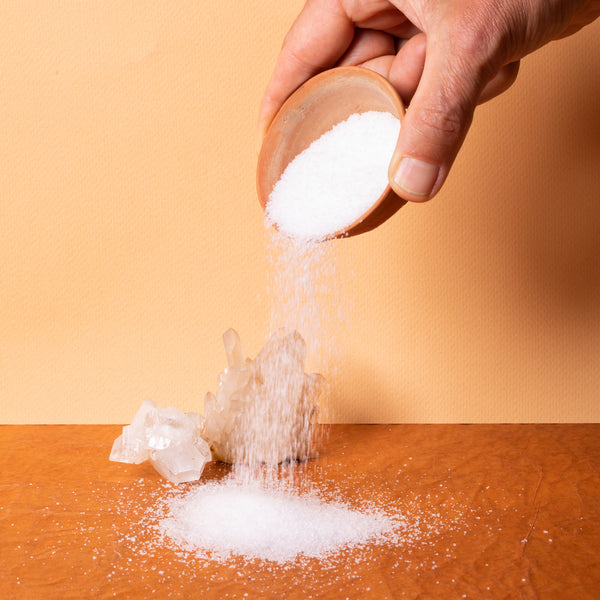
"lytos" in Greek means untied, set free. Electrolytes are minerals freed from the earth into water, given an electrical charge — and that charge is what lets your cells talk to each other, hold water, and thrive. Salt is the only edible crystal in the world. When it dissolves, it comes alive.
Processed table salt, iodized salt and refined sea salt are not digestible foods — they are isolated chemicals. Stripped of every mineral except sodium chloride through factory processing, they irritate the kidneys and cause excess water weight, creating the very fluid imbalance they pretend to solve. These undigestible, processed salts actually raise blood pressure levels and end up giving electrolytes a bad rap.
Think of ocean salt as a whole food, full of essential nutrients, while table salt is processed and stripped of any medicinal qualities.
Please join us in boycotting Himalayan Pink Salt. It is being stripped from million-year-old mountains, and we do not need any more wars or killings to occur at the expense of our desires. Let's leave this precious commodity in the sacred Himalayas where it belongs.
Real, unprocessed ocean salt is something else entirely.
When waves crash against the shore, chloride and sodium collide with magnesium and potassium — and a crystal is formed
Salt is the only edible crystal in the world
When it dissolves in water, it comes alive — charged with electricity, ready to carry signals from cell to cell, to open doors, to move water where it needs to go
In the Trine of Hydration, electrolytes are the first pillar. Without them, water cannot be absorbed — it simply passes through. This is why they are called "essential" electrolytes.
When you find yourself urinating immediately after drinking, your body is telling you it needs electrolytes, not more water
When the frequency decreases, you will know your waters are being properly fed with ample volume to move from one place to another
Don't let your juicy body plum turn into a wrinkled prune any sooner than age will do for you.
One practical note from DeAnna: always add electrolyte salts after cooking in a metal, cast iron or copper pot. Metal de-ionizes salt and diminishes its charge.
Origin: Brittany, France — hand-harvested on pristine Atlantic coastline, natural mineral content preserved
The most hydrating of all salts — rich in magnesium, potassium and trace minerals
Calms the nervous system, fights fluid retention, supports adrenal function, balances both high & low blood pressure
Daily Dosage
Add half a teaspoon to warm water every morning
Can take 2× per day — second dose is perfect in mid-afternoon (2–5pm kidney peak)
The kidneys are the seat of vitality in Ayurveda — the reservoir from which all energy is drawn. When they are well-nourished, the adrenals stay calm, the waters stay clear, and the river runs strong. A warm cup in the morning is not just hydration. It is an act of devotion to the deepest source of energy, clear waters & immunity (prana, tejas and ojas).
Warm, mineral-rich and adrenal-nourishing
Supports kidney vitality and morning hydration
Start your morning here — before it starts without you.
In Ayurveda, Abhyanga is the practice of anointing yourself with oil, kept up daily not as indulgence but as maintenance, a kind of love made physical. Oil on the skin carries essential fatty acids into the tissue, lubricating the lymphatic vessels and opening the cell membranes so water can actually enter, which makes it the second pillar of the Trine of Hydration and the reason you can drink all the water in the world without it ever reaching the cells that need it.
Essential fatty acids in oil form — the key that opens cell membranes to water
The daily oil — keeps the channel supple and the cells hydrated, in any season
Apply warm after bathing. Oil outside, water inside.


Our bodily systems are of utmost importance in the balance of health — the lymphatic system in particular, known as Rasa or the "River of Life" in Ayurveda. The word "lymph" is Latin for "clear water." Our waters must be flowing and clear.
The lymphatic system is a widespread network of nodes, vessels, and fluids that visibly resemble delicate rivers and tributaries. This network is the thoroughfare for our immune system and for the delivery of hormones, nutrients, and proteins to all corners of the body.
Just as we can observe imbalance and equilibrium in the world around us, we can observe our own bodies and health in the same way. And just as we can understand the different elemental conditions that affect our Earth's rivers, we can begin to understand and care for our own internal waters.
Our hormones flow from one gland to another via the lymph waterways. All glands of the body use lymph vessels as freeways for the transportation of hormones — meaning ALL your body systems communicate via the lymphatic system.
Our river needs water to flow. We need to maintain a steady flow in order to remove debris; otherwise, the water can become stagnant and breed bacteria, just like Earth's rivers. Keeping your lymphatic river flowing is the best way to boost immune function.
Fights infection, bacteria, and all foreign invaders
Drains accumulated toxins and foreign particles
Holds memory of virus and infection from past experiences
Facilitates hormones traveling from one gland to another via lymph fluids
Stabilizes our equilibrium balance
Returns excess interstitial fluid from tissues to the bloodstream to maintain volume
Nourishes all cells and blood formation
Creates pain — the "inflammatory response" — to alert us of an issue in our flow or an injury being experienced. This means we are NOT designed to live in pain; pain is a symptom that needs attention.
Our lymphatic immune system also makes scar tissue to fill the voids of life experiences, injuries, and repetitive use of our bodies.
The Romans called clear spring water lympha and named its guardian nymphs the same. Your lymphatic system is your inner nymph — moving silently through the body's most intimate places, keeping the waters clear, the currents alive.
The lymph river is where our immune functions happen
It is the highway within, where the flow of our hormones moves from one gland to another
River restoration is accessible by touch.
The river of life must be restored and waters flowing to enable these important duties that our body performs for us. Lymph has no pump. Unlike blood, which has the heart, your lymphatic river moves only through your own movement, breath, and touch.
Laughing is the best lymph medicine — but breathing, exercising, massage, gua sha scraping, and salt scrubs all support daily lymph flow, leaving the skin lustrous and easing pain along the way.
If you find or feel pain, remember: it needs support, and it can be rubbed out, layer by layer. A little bit each day goes a long way. There is no shame in assessing yourself through touch or knowing what feels good to you.
Handcrafted in Sebastopol, California by Scott Jenkins, co-founder of dhyana Essentials
Rooted in 刮痧 (Gua Sha) — ancient Chinese and Ayurvedic scraping technique used for centuries
Moves lymph, breaks down adhesions, smoothes cellulite, releases lactic acid
Use from feet to heart, hands to heart — always toward the center
Abhyanga is the art of Ayurvedic self-massage with oil, applied daily for lymphatic balance. Oil applied to the skin carries essential fatty acids directly into the tissue — muscle, skin layers, bones and nerves — while lubricating the lymphatic vessels from the outside in, which makes Essential Fatty Acids the second pillar of the Trine of Hydration and the only key that lets water cross the cell membrane rather than sit outside it.
For a body in balance, Mahanarayan oil is the daily anchor that keeps the lymphatic vessels supple and the cells hydrated, applied warm after bathing and worked from feet toward heart, hands toward heart, and then neck to heart.
Origin: India — a classical Ayurvedic formulation of 37 herbs in organic sesame oil, used for centuries
The daily oil — keeps the lymphatic channel supple and the cells hydrated, in any season
Restorative to both mind and body
Apply warm after bathing, massage in, leave to absorb
A salt scrub is the most direct way to wake a sleeping river.
The mineral grit of unprocessed ocean salt pulls stagnant lymph toward the surface
The friction itself sends a quiet message to the nervous system — you are here, you are held, you are tended to
Use vigorous circular motions, always feet to heart and hands to heart
Stop when your skin tissue warms up, feels alive, and has a glistening blood glow. This phenomena occurs with everybody's skin — all around the world.
A body in balance gets to keep the whole kit on hand. Mix and match across the four scrubs, or reach for the one your body is leaning toward on any given day. Cooling for hot, flushed days. Warming for cold, sluggish ones. Cleansing when the channel feels heavy. Nourishing when it feels thin.
For hot, flushed, quick-to-flare days. Cools down heat and flushes it through the lymph.
For cold, stiff, sluggish days. Warms the channel and wakes a slow-moving river.
For heavy, clogged, slow-moving days. Loosens the debris dam and improves the lymph river flow.
For dry, depleted, thin-feeling days. Builds the tissue while waking the lymph river.
Every river begins in its tributaries, and for the body's river the first tributaries are the sinuses. The neti pot is the daily practice for clearing this upstream water, and the neti salt is what makes the rinse safe and effective. For a body in balance, this is one of the simplest daily wins — a few minutes at the sink that keeps the whole channel breathing clean.
Once a day, mix a half-teaspoon of Baraka Neti Salt into 8–10 oz of warm spring or distilled water, pour gently through one nostril at a time over a sink, and breathe. The morning is the natural time — kapha hour, when the body is most willing to release what has accumulated overnight.
Handcrafted ceramic, made in Sonoma County since 1996. Ergonomic, lead-free, dishwasher-safe. Holds 8–10 oz — enough for both sides in one session.
Formulated by DeAnna Batdorff. Celtic sea salt and organic, wildcrafted essential oils — supports clear breathing and balanced sinuses. Instructions for use included.



What we see is what we consumed.
Ayurveda, the science of life, recognizes the digestive tract as the seat of health. What goes in the gut is assimilated and absorbed into the lymph river and bloodstream — or needs to be cleansed out via the colon.
Eat 3 meals a day — to keep coals on the stomach fire
Eat 2 handfuls per meal — the proper size of a meal
2 belches each meal — pay attention and you'll recognize a small belch when half full, and a full-bodied belch when the stomach is ¾ full and still has room to expand as it breaks down
Hydrochloric acid — warming pH balance
Pepsin — cooling pH balance
Mucin — flora lining for nourishment
Duodenum — Jejunum — Ileum
Ascending — Transverse — Descending colon
The stomach is the first organ in the body, acting as the compost pile of the digestive tract. It is the first line of immune defense, with the largest part of our immune function happening around the stomach and liver. The stomach is where our body's naturally occurring acids and enzymes break down macro nutrients to micro nutrients (liquid chyme) to be absorbed and utilized.
The small intestine is made up of peristalsis rings of muscle, squeezing and mulching food to a liquid that slowly drips through twenty feet of villi and microvilli. It is three times the length of your body, so that amino acids, fatty acids, and sugars can pass into the bloodstream and into the lymphatic channels in a timely manner.
The large intestine is the organ that squeezes out all the nutrients it can, moving food up, over, and downward to ensure success while forming stool and ensuring toxins can be removed through our bowel movement.
Agni is the fire that transforms food into you — that takes what the earth grew and turns it into bone, blood, thought, and feeling, making it yours. When Agni burns cleanly and steadily, everything moves, everything is absorbed, everything becomes life and our tissue health.
A body in balance keeps a digestive fire that does its own work, day after day. The role of spice in a maintenance kitchen is not to correct the fire but to keep it varied — so it learns to handle the cooling, the warming, and the cleansing it will need across the year. Reach for one or all three; the variety itself is the medicine.
Three spices cover the daily range:
Sumac — sour and astringent, sharpens the fire and clears what has begun to settle in the channel
Methi — bitter and sweet, steadies an overactive fire while gently building the tissue underneath
Curry Leaf — bitter and pungent, moves what has settled and supports the gut's quiet daily work
Use them generously, on everything, until they become the seasonings your body reaches for without thinking.
Origin: Middle East. Sour and astringent — sharpens digestion and clears what has begun to settle in the channel. Dust over eggs, grains, roasted vegetables, and soups.
Origin: India. Fenugreek — bitter and sweet, steadies an overactive fire while gently building the tissue underneath. Soak and add to soups, stews, dals, or grain dishes.
Origin: India. Bitter and pungent — moves what has settled and supports the gut's quiet daily work. Tempered in oil at the start of dals, soups, sautés, and rice dishes.
Once the enzymes are awake, the work of digestion begins where you might expect it least — in the health of your teeth and gums. The mouth is the first tributary of the digestive river, and the bacteria that live there are in constant conversation with the bacteria that live in your gut, traveling down with every swallow. When the mouth is inflamed, the gut inherits that inflammation. When the mouth is clean, vital, and balanced, the river starts clean.
Chewing is its own quiet medicine, lengthening the time enzymes have to meet your food and sending a small massage up the jaw into the brain that switches the body out of fight-or-flight and into rest-and-digest. Your tongue is your daily weather report — a clean, pink surface is what you are looking for. Anything else is information, an invitation to look upstream before anything new enters the current.
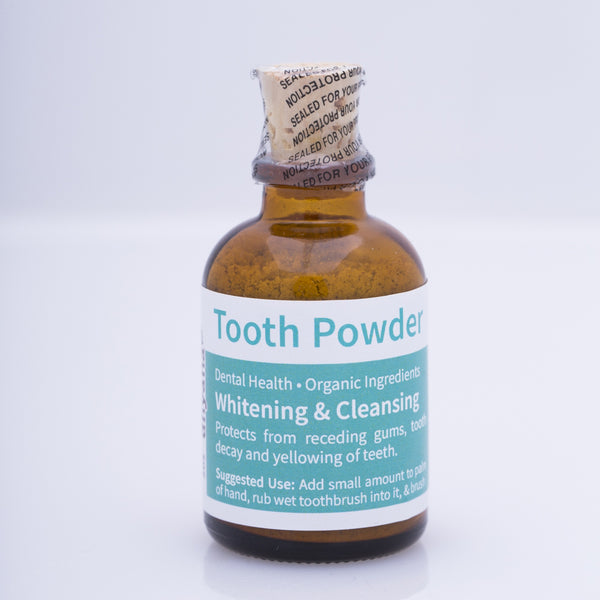
Three tools, one ritual — warming and cleansing, cooling and cleansing, and a tongue scraper in either finish. Together they cover every quality your mouth needs to start the river clean.
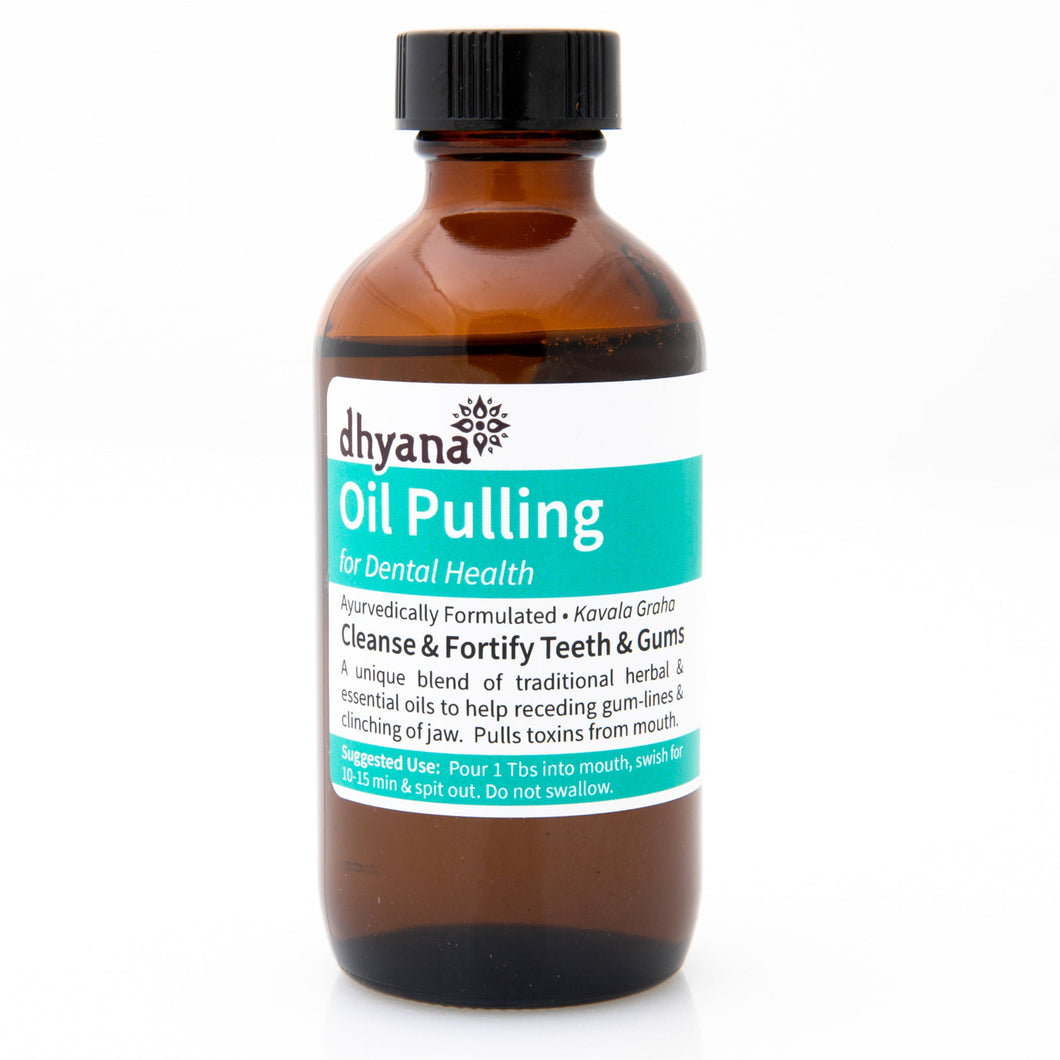
Herbal & essential oil blend that pulls toxins from the mouth, supports receding gum lines and clenching jaw. Step one of the morning.
Plant-based and mineral-rich. Cleans and remineralizes in one step — upstream medicine for the whole day.
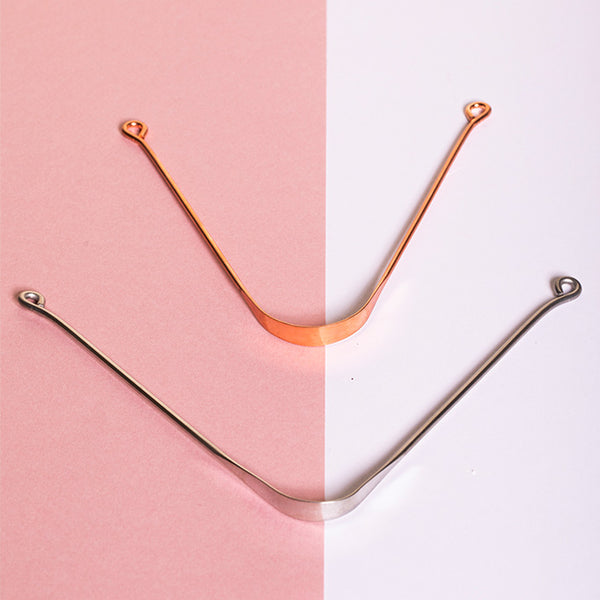
Either finish works for this protocol — steel runs slightly cool, copper slightly warm. Choose whichever calls to you. Scrape before breakfast to clear what surfaced overnight.
Agni is doing its quiet daily work — the morning's job is simply to greet it, set the tone, and let the fire settle into the day. Golden Milk is the right cup for this. It is gently anti-inflammatory, supportive of the gut lining, and steady — neither flaring the fire nor cooling it down too far. With each ingredient doing its own work:
Turmeric — cooling and cleansing, deeply anti-inflammatory, and supportive of the liver, skin, and blood
Ginger — measured carefully so the fire keeps moving forward without tipping into flare
Sweetness — nourishing the mucin lining of the gut, the slippery flora the channel needs to stay supple
One warm cup in the morning, sipped slowly, lets it set the tone for the river's day.
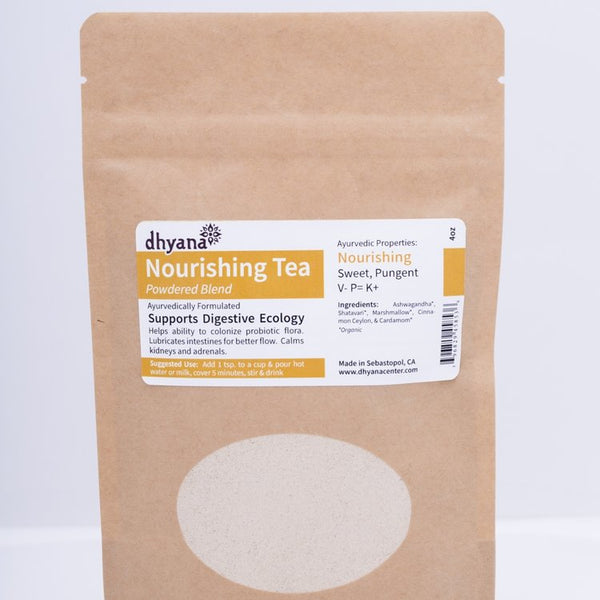
Turmeric-anchored, anti-inflammatory, Agni-supportive
Steady morning cup — neither flares nor cools the fire too far
Nourishes the mucin flora that protects the gut lining
Stir into warm water or plant milk — make it a morning ceremony
Continue learning
Upcoming Courses
Live and recorded courses to support your elemental health practice.
 December 2026
Clinical Ayurveda Foundations
Ayurvedic Clinical Foundations is the keystone course of dhyana Essentials, offering the classical groundwork for deeper study within our lineage.
Learn more and register
Edible Ayurveda
Where Ancient Wisdom Meets Modern Nutrition: Digestive Physiology Through the Ayurvedic Lens
Learn more and register Starts July 11 - 7 Saturdays
MyBody Mapping
In just 7 weeks, you’ll gain the skills to listen to your body, understand its unique signals, and apply practical tools to support your health journey.
Learn more and register